Balayage Masterclass: Choosing the Perfect Caramel Tone
 By Jordan Hayes
Caramel is the most requested tone in our colour studio, and also the most frequently mismatched. It photographs beautifully on other people, which is precisely the problem: the shade that looks luminous on a stranger can read brassy, muddy, or oddly flat once it sits against your own skin.
Balayage done well is not a colour you choose from a photograph. It is a placement decision, a tonal decision, and a maintenance decision, made together. Here is how we approach each one.
What Balayage Actually Is
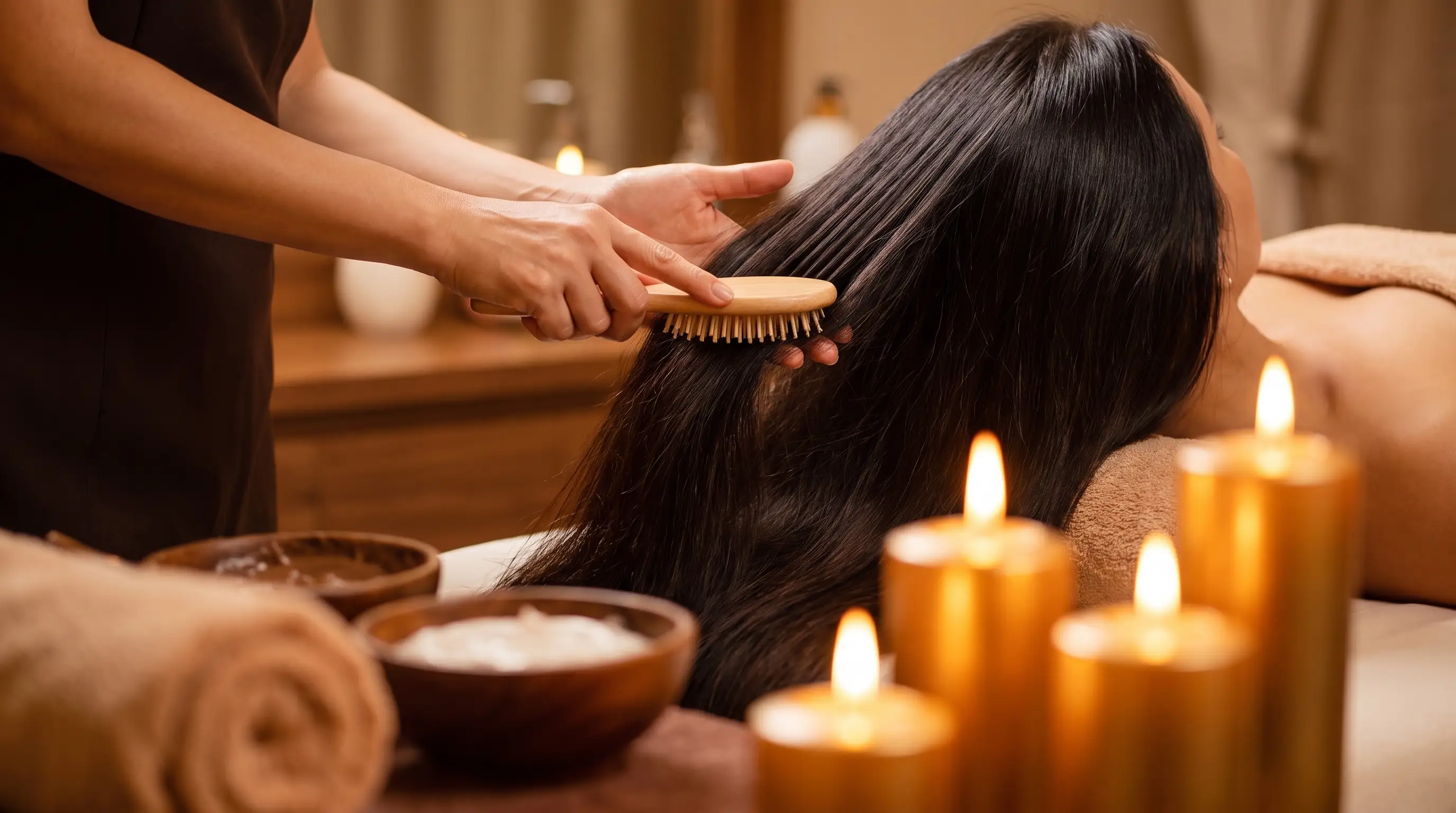
Balayage is a freehand technique. Lightener is hand-painted onto the surface of the hair in sweeping sections rather than saturated through foils from root to tip. Because the colourist controls exactly where saturation begins and how heavily each section is loaded, the grow-out is soft and diffused rather than a hard line.
This is what makes it dimensional. Foil highlights produce uniform ribbons. Balayage produces a gradient, with the lightest pieces concentrated where light would naturally fall and deeper tones retained underneath.
Why placement matters more than shade
The pieces framing the face do most of the visible work. Brightness placed at the cheekbone lifts and widens; brightness kept lower, from the jaw down, lengthens and slims. A skilled colourist maps this to your bone structure before mixing anything, which is why two clients can leave with the same formula and entirely different effects.
Reading Your Undertone
Caramel is a family, not a shade. Selecting from within it depends on your skin's undertone rather than its depth.
Cool undertones
If your skin reads pink, rosy, or faintly blue, and silver jewellery tends to flatter you, go for caramel on the cooler side of the family. Think mushroom caramel, soft beige-toffee, or a caramel cut with an ashy base. A heavily golden caramel against cool skin can make the complexion look ruddy.
Warm undertones
If your skin reads golden, peachy, or olive, and gold jewellery suits you, the classic honeyed and buttery caramels are yours. These are the tones most people picture when they say caramel, and they sit harmoniously against warm skin without competing with it.
Neutral undertones
Neutral skin has the widest latitude. Here the deciding factor is usually eye colour and natural base depth. Warmer caramels bring out amber and green; cooler caramels sharpen contrast against dark brown eyes.
Be Honest About Hair Condition
This is the part of the consultation clients most want to skip, and the part that most determines whether they are happy in three months.
Lightening is a chemical process that opens the cuticle and removes pigment. Hair that is already porous, previously box-dyed, heat-damaged, or chemically straightened will lift unevenly and hold tone poorly. Highly porous hair grabs pigment quickly and releases it just as quickly, which is why some clients feel their gloss vanishes within a fortnight.
A responsible colourist may recommend achieving your target across two or three appointments rather than one, or building in a bond-protecting treatment. If someone promises a four-level lift on compromised hair in a single sitting, that is a reason for caution rather than excitement.
The Toner Conversation
Lightener removes pigment; it does not create a colour. What comes out of the lightening stage is raw, exposed underlying warmth, usually somewhere between orange and pale yellow depending on your starting depth.
Toner is what turns that raw base into caramel. It neutralises unwanted warmth and deposits the specific shade you agreed on. Toner is also the component that fades first, which is why the gloss refresh, rather than the full balayage, is the appointment that keeps the colour looking intentional.
Maintenance That Actually Works
Caramel balayage is genuinely lower-maintenance than foil highlights at the root, but the tone still needs upkeep.
Book a gloss or toner refresh roughly every eight to ten weeks, with the full balayage service every four to six months depending on your growth rate and how bright you like it. Between visits, switch to a sulphate-free shampoo, since sulphates strip deposited tone faster than anything else in a bathroom cabinet.
Wash in cooler water. Heat opens the cuticle and lets pigment escape. Use a heat protectant before any hot tool, and keep styling temperatures moderate. If your caramel starts drifting brassy, a blue-toned shampoo used sparingly, once weekly at most, corrects orange more effectively than a purple one, which is formulated for yellow in blonde hair.
Chlorine, hard water, and prolonged sun exposure all shift tone. A leave-in with UV filters through summer is a small habit with a visible payoff.
Preparing for Your Consultation
Bring several reference images, and include one or two you dislike. Knowing what you want to avoid is often more useful to a colourist than knowing what you want.
Disclose your full colour history honestly, including box dye, henna, and any keratin or straightening service, all of which affect how hair responds to lightener. Expect a strand test if your history is complicated, and a patch test before any tinting service. Ask directly how many appointments your goal will realistically take, and what the upkeep costs and schedule look like over a year.
The Right Caramel Is the One You Forget About
A well-chosen caramel does not announce itself. It makes your skin look brighter, your eyes clearer, and your hair look like it grew that way. Get the undertone and the placement right, respect what your hair can comfortably take, and keep the tone topped up. The rest takes care of itself.